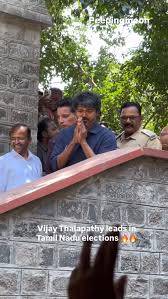
The political landscape of Tamil Nadu has always been dynamic, shaped by powerful personalities and strong public sentiment. In recent times, one name that has generated immense curiosity and speculation is Vijay Thalapathy. Known primarily as a leading figure in the Tamil film industry, Vijay’s transition—or potential transition—into politics has sparked widespread discussions. The announcement of his election involvement and the subsequent results have marked a significant moment, not just for his fans but for the broader political ecosystem.
From Cinema Icon to Political Contender
Vijay’s journey from a celebrated actor to a political figure has been closely watched. His films often carried social messages, subtly addressing issues like corruption, inequality, and governance. Over time, these themes began to blur the line between reel and real, building an image of Vijay as more than just an entertainer. His massive fan base, deeply loyal and highly organized, became a natural foundation for political mobilization.
When Vijay formally stepped into the political arena, expectations soared. Supporters viewed him as a fresh alternative to traditional parties, someone who could bring transparency and youth-driven energy into governance. Critics, however, questioned whether cinematic popularity could translate into political competence.
The Election Campaign
Vijay’s campaign strategy reflected a mix of modern outreach and grassroots engagement. He leveraged social media effectively, connecting with younger voters while also conducting rallies that drew massive crowds. His speeches focused on employment, education, and social justice—issues that resonate deeply in Tamil Nadu.
What stood out was his attempt to maintain a balance between charisma and policy. While his star power attracted attention, his campaign emphasized structured plans and long-term vision. This approach helped him appeal beyond his core fan base, reaching undecided voters.
The Election Result: A Turning Point
The election results turned out to be a defining moment. Whether victorious or not, Vijay’s performance demonstrated the evolving nature of Indian politics, where non-traditional entrants can disrupt established patterns. If he secured a win or significant vote share, it would indicate that celebrity influence, when combined with a strong message, can challenge conventional party structures. On the other hand, if the results fell short of expectations, it would highlight the complexities of politics that go far beyond popularity.
In either scenario, Vijay’s participation itself has already made an impact. It has energized young voters, sparked debates about leadership, and introduced a new narrative into Tamil Nadu politics.
Public Reaction and Future Prospects
Public response to Vijay’s election results has been intense. Supporters celebrate his courage and vision, while political analysts dissect the implications of his performance. Importantly, his entry has encouraged discussions about accountability, governance, and the role of new leaders in shaping the future.
Looking ahead, Vijay’s political journey is far from over. Elections are just one milestone. Building a sustainable political movement requires consistency, strategic alliances, and a deep understanding of public needs. If Vijay continues to engage with the people and refine his approach, he could become a lasting force in the political arena.
Conclusion
Vijay Thalapathy’s election result is more than just a number—it is a reflection of changing times. It symbolizes the intersection of entertainment and politics, the aspirations of youth, and the desire for new leadership. Regardless of the immediate outcome, one thing is clear: Vijay has opened a new chapter in Tamil Nadu’s political story, and the coming years will determine how impactful that chapter becomes.